Thursday, September 15, 2016

57 years of Doordarshan- a journey DD

I knew it as Doordarshan but now it is known as DD. There are various channels of DD at present, DDNational, DDsports, DDNews, DDIndia and DDBharati. 
It has been a journey of 57 years for doordarshan. I don’t know who coined this name for our National TV, but it was perfect choice for national TV.
Often we used to call it as Sanjay ka kaliyugi avatar. lat; dk dfy;qxh vorkjA
egkHkkjr esa lat; dh nwj n`’fV dk o.kZu vk;k gSA
@DD_National twitter handle of Doordarshan twitted these photographs

Then through the years we started liking DD. But we hated it also so much so that its name was coined as #dkoV ds fy, [ksn gS  
In those days it used to happen on almost all Sunday movies that this caption was shown in middle of scenes. 
That time all of us used to curse the doordarshan. Sometimes during telecast of cricket match if this caption came, all students cried loudly.


Luckily, we carried over that period and passed on to a new chapter when there was a Metro channel came. It was for two hour special channel on Doordarshan. Then in 1982 the INSAT thing happened and we got a National Telecast in a real sense. Our late Prime Minister Smt Indira Gandhi ji asked the Capt. Rakesh Sharma when he was in the spacecraft above in the sky, that how does our India looks like? He without any hesitation replied that lkjs tgkaW ls vPNk Sare Jahan se Accha. To this reply Smt Indira Gandhi also laughed. All this happened in front of our eyes. Whole nation enjoyed. Asian, National games-Bhartiyam, CHOGM, NAM, SAARC all started happening on the screen in our houses. Nothing of that sort ever happened before. All this happened in COLORs, earlier all we saw was in black and white screen.

click to see the video
In 1982 TV came to my house. There was this program on Immortal melodies Immortal Men. All stalwarts came on screen, Rajkumari ji, Noorjahan came to India and sang vokt ns dgka gS rw nqfu;ka rsjh tokWa gS Great Naushad sahib conducted the song. As it seems, that time stood still.
Earlier when there was only one TV in whole colony, all children used to hang on to the window of that house. Those who were close to that family were lucky and saw the TV from inside of the room. But I was a weak child, I got the chance to hang in the window iron bars and sometimes I was not even given that opportunity also by the mighty boys of our colony.

Those were bad times for me. I used to think why this TV is not in my house? But then how could we ask such questions to our parents? We did not have tape recorder, not even a camera? But yes we had a Radio. It was a big one named as PIE. It was from UK I think? My father was in Indian Navy. He was in the team that brought INS Vikrant to India. That time my father might have bought that PIE Radio, I think?
Later we used to walk for 1 km from type one in IIT Kanpur campus to type two to watch Sunday movie in house of Mathurs. I am gratefull to Mathur family. They did permit us to watch TV sitting in their drawing room. It was a great thing on their part in those days. Yes it was a great emotional thing. I had been scolded many times in some houses, as to not to touch those sofa covers. While watching TV, in ecstasy sometimes I forgot my poor existence and might have put my hand on sofa cover that gave wrinkles. That was enough to get a scolding from the lady of house. It was quite OK for me. It was not a big price to pay in lieu of watching that idiot box?? Isn’t it? 

But time passed on From 1976 to 1982. But in this journey i came to know lot of great souls of India. Our Bharat Ratna a great soul, a Divine Singer Smt MSSubbulakhsmi one such persona. Smt Rukmini Devi Arundale, Kamala Devi Chatopadhyay, Popul Jayakar, Kanak Rele Mrinalini Sarabhai, Ranjobati Chaki Sarkar, Jhaveri Sisters etc all became know to me

Even in 1982 many households did not own a TV. 
In villages, where i visited during summer and winter vacations not many had even a Transistor. Few enthusiastic youths and few landlords had Transistors. They had nice colorfull covers, nicely woven by the ladies of households. The cricket match was the prime objective for transistors among young. News/Samachar and some film songs were the attraction for rich people. 
Later even rickshaw pullers also had transistors nicely tied on to their handles or specially designed hangers on cycle or rickshaws. In bus also i saw good arrangements were made to hang Transistors. Transistor was must in dowry in those times.

Even during the time of Reshma ji, she did not know much about Radio. After lots of reluctance she was allowed to sing on Radio.

But When in 1982 TV came to our house our sensibilities changed. Prior to that we were depending on Dharmayug, Hindustan, Illustrated weekly, Kadambini, Navneet
Sarita, chandamama, Amar chitra katha, parag, chandan or nandan? gudiya, for various needs of Knowledge, entertainment etc. 
Later i also had Vama, Femina, Frontline, Reader Digest and few other magazines for my reading. 

I used to read books of Gaura Pant who was famous as Shivani ji, Acharya Chatursen, Premchand, AmritLal Nagar etc.
Newspapers were also there- Hindustan Times, Times of India, Aajtak, Dainik Jagran. Smt Shanta Sarebjit Singh, Smt Anees Jung were writers whom i read in these news paper.

Why that was called as idiot Box?
Through Doordarshan really i got darshan of far off places. I got to see films in Malayalam, Tamil, Kannada, Gujarati, Rajasthani, Marathi, Manipuri, Bengali, Punjabi, Assamese, Telugu, Bhojpuri, Oriya,  i doubt whether there was any film in Kashmiri? back then. Till 1990 i kept watching doordarshan at my home.
I saw Sagar Sangamam, Sindhu Bhairavi, Agni Nakshatram, But i liked the most film Sankarabharnam. 
Then there was my fav star a super star most creative person i have ever seen after V Shantaram ji was NTR NT Rama Rao. 
All of his films shown on Doordarhsan were superb. Daanveer Karna, where he wore most artistic Shoes, and walking in the compound of pandava, he placed foot on the floor. The camera NTR used in that film was most innovative. Sita Rama Raju. where he played role of the fighter. Then there are many such films where NTR played role of Krishna, Vishnu etc. All films were artistically superb, Each Frame of his films were like paintings. Just as most of the films of V Shantaram ji were like a Painted canvas. He was a creator of art. I don't remember how many films were shown on DD in Telugu, but most of them i saw were of NTR. 
Then there were Tamil films, Shivaji Ganeshan, and MGR etc. The film in which Shivaji played a mythological? role where he was fighting with his own son. But he did not know that fact. later somewhere during fight or after that he was told that fact.
Then there was a film in which heroine was staying in her sister's house and during absence of her sister she went to her bedroom. But in Night the hero came and unforgettable thing happened. Hero thought that lady was his wife.
Then in one film the heroine is a district collector and the hero is a simple govt employee. The films of Padmini, the gem of Travancore sisters. this dance sequence where i think MGR was there, and went to see the dance of heroine in disguise, as if nobody could see them. There were so many films. few were of Vaijayantimala in Tamil also. Padmini played a role of a dancer.
There was this film in which i saw Jayaprada and sridevi together. (am i correct?)
The famous film in which Kamal Hassan worked with Jayaprada. He had some dance scenes.
Bombay i saw in Malayalam. But later it was also made in Hindi.


With the journey of Doordarshan i came to know about many stalwarts and GEMs of Indian Music. The Gauhar Jaan was the star of her times. She was a Super star celebrity of her times compared to present times celebrity, she was more highly paid and commercially successful.
Nati Binodini was one another star theatre personality in Kolkatta.

There were few good programs on our rich tradition of Music also. Smt Naina Devi ji was the permanent feature in many such programs on Doordarshan. There were many such vidushis. Like Sidheswari Devi, Girja Devi, Rasoolan Bai, Asgari Bai, later Begum Akhtar became the star attraction on Doordarshan also.                             There was Shobha Gurtu, Usha Uthup though apposite genre of music but both captivated audiences through their music, Doordarshan telecasted their programs.

Sunday and Saturday were full of events. Illa Arun brought one program on singing and acting. She was good at both. Neena Gupta also made some programs. Shweta Shetty(menon?) one pop star.
But most captivating were films on sundays. I was glued to screen on these days. Often i had watch without sound in late midnight programs. As everybody used to sleep thus i had to see silent screen. Later my younger brother attached a device through which i could listen from ear plugs.
I was hooked to Meena Kumari, Rekha, Waheeda Rehman Asha Parekh, Mumtaz, most amazing was Helen ji. She was a superb dancer. Vaijayanti Mala Bali, Nutan, were of from another great class.
Pakeezah, Umrao Jaan remained my favourite films.


All through school days i danced on this song- Tahre Rahiyo Banke Yaar Re of film Pakeezah. My class mates used to tell me that when they heard song inhi logon ne or this song of pakeezah on their radio they remembered me and my dance. that was connection of radio with me???
In primary school one song which was famous about me was Najar lagi raja tore bangle par. Smt Nalini Jayawant had danced i think on this song. Everytime this song came of radio people told me that they remembered me?? what a connection?

Tuesday, September 06, 2016

Uday Shankar interviewed by Shombhu Mitra

Uday Shankar Kalpana Part 3

Uday Shankar Kalpana Part 2

Kalpana - Full Movie

Uday Shankar Kalpana Part 1

Uday Shankar Kalpana Part 1

Phoolwanti Episode 9

Phoolwanti Episode8

Phoolwanti Episode8

Phoolwanti Episode 7

Phoolwanti Episode 6

Phoolwanti Episode 5

Phoolwanti Episode 4

Phoolwanti Episode 3

PHOOLWANTI EPISODE 1 PART 2

Phoolwanti Episode 10 Last Episode

PHOOLWANTI EPISODE 1 PART 1

 I saw this TV serial on Doordarsha. Even though it was black and white i saw each and every emotion very clearly. The story of this girl called phoolwanti is story of struggle that had been part of every women of a particular community. In Maharastra they are known as Kalawant in Andhra Pradesh similar word was Kalavantalu Kalawantalu etc. 

However there was a system of Devdasi in many parts of our India. Due to English we have to write Devadasi?. I saw a hindi film on a story of devedasi was shown. That was based in a village of Maharastra. I think Mausami ji was the lead actor in that film. 


Malaria, ZIKA and Health system? MDG SDG or what?

Health is a major issue for mankind. Health is wealth is the common saying. But what mankind is doing for health, and what for improving Health system?
Recently on TV saw news about Malaria, ZIKA virus.
We were already struggling with highest killer of our times the Malaria, then Dengue and Chikengunia came out of blue. Now this deadly virus ZIKA has come, it forced The stalwart of motor company TATA motors to rename their vehicle as was reported in TV news. Earlier people were dying with TB, pneumonia, cholera plague etc. I mean they were common names or known to everyone. But now as science is progressing we are made aware of more and more new names of DEVILS.
SriLanka has been now made free of Malaria. Is it possible? Seems so as the TV news says.
Few steps I think they have taken
Identify the areas/spots with high incidence of Malaria.
Mobile Malaria clinic/units established.
Even suspected cases are screened and treatment starts on spot.
Together with other usual actions such as fuming, spray, cleaning etc.
Can we replicate it in India?
National Vector Borne disease control scheme was implemented across nation.
Lots of methods have been utilized. Even bio-control was also there? If, I am correct? A fish is also introduced in the fresh water ponds which control the mosquito larvae.
But now thing is how malaria spreads?
Nowdays Rural/Urban divide is no more atleast for Malaria and other vector borne diseases. In past the movement of communities was not frequent or large thus chances of spread were not there. Thus few diseases remained in those pockets. As recently we have seen in China when a village or one area was fully cordoned off from outside world. It was to curtail the spread of flu like disease.
In India also suspected patients were kept in quarantined ward of Hospital.
As is saw on TV people were blaming Govt and local agencies for inaction.
But TV had shown those areas also where high rise apartments and residential colonies are having surroundings full of stagnating water. Mosquito larvae survive in those water spots.
Community Participation is must in all such cases. Even WHO definition of Health or Healthy includes healthy surrounding or neighbourhood.
In a democratic country like India anything works differently and difficult.
People clean their rooms but throw garbage outside from their windows or doors on to the streets. Who will clean street which is situated in front of their houses?
Fuming/Spraying are the tools to kill mosquitos. But when citizens blame Govt or local self govt bodies like Municipality etc. for not doing anything then in same voice they don’t talk or think whether they have given/paid their tax or fees or sanitary charges, conservancy charges etc to their local bodies? How local bodies will incur expenditure on fuming/spraying?
I even think that why not every citizen makes their habit to DONATE some money to their local bodies every now and then? Whatever the small contribution it may be? But as a member if Mohala committees, Gram Sabha, and other forums every citizen has their say in SOCIAL AUDIT. It sound easy in writing, but in implementing it is difficult. But at least we can try?
I had a fight with a worker who worked in the Filaria section. He argued with me that why you are not sanctioning the Patient care allowance? To that I asked how come you are eligible to Patient care allowance. He replied we are working in fields and spraying etc is done by the staff to protect people from filarial and malaria. I then asked how many pockets you have identified on inspection having malaria or filarial vectors or larvae or patients? To that he started fighting with me. Where is could have complained? I am weak in such situations. I belong to poor background we don’t have any confidence or support to complain against anybody- it has become a trait in our genes.
But I was surprised that how this PCA was utilized? It is given to the workers doing patient care in Hospitals. How can I give it to those who work in field and I should not write it here but truth is no one does inspection in true spirit. But they were fighting with me for the patient care allowance. After that lots of conspiracy was against me so that I can fall in net of law? How in Government we work it is hard to imagine. How can I save my govt job?
Do you know what happened with one noodle brand? Why suddenly after so many years it was caught? Inspection of food inspectors, drug inspectors etc is the main reason behind this scam? Our health system needs improvement. But how can we improve it? Until and unless we the people do not improve ourselves there cannot be any improvement. What Government alone can do anything?
When I needed ambulance in city in the middle of night, I was told it will be late. I said how much, please do something? They replied may be half hour. First they have to be told exact location of my house. They said come out so that we can spot you. But yes that day God saved me and Ambulance arrived even late, as I waited on the side of road siting under soft shower, my wife and my son in attendance in street on that midnight. I am grateful to my wife and son.
But thing is people in many departments do not function. Have you heard that boy in Kanpur died. It is only poverty and ignorance which is the cause. The well to do families go with many people with them and show their might with guns and bad language, then only the people working in some department immediately start functioning.
I went to hospital, it was a referral hospital for ultrasound, they told me to come after one month and gave me date. Is it possible? That with such type of health system we are dreaming to achieve Sustainable Development Goals, MDG etc etc

Saturday, September 03, 2016

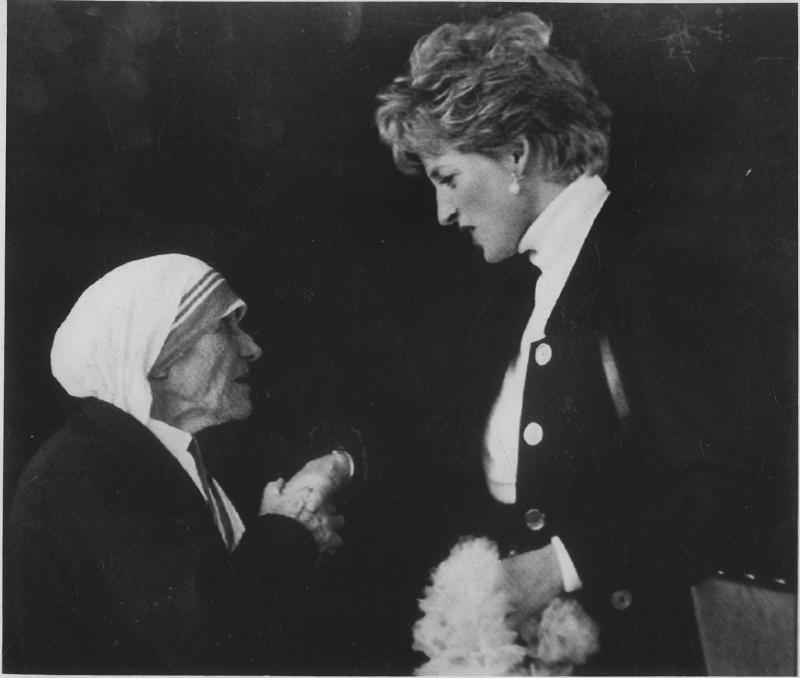
Mother Teresa

Mother Teresa, the name needs no introduction. We have always heard this saying that it is like showing a small Deepak to the SUN. means showing light to SUN. In this century she was the perfect example for this saying. Her name itself tells all, nothing is left to imagination.
I don’t know when for the first time I heard her name. But since the time I heard her name I considered her as someone most respected person on this earth. At this age of 50 years I very well can imagine the plight of a poor on street, that too in Kolkata, a leprosy patient with his pain on streets, where he is left to die by the society and his own family. She once said that once she saw a woman on streets of Kolkata whose body was eaten by rats. Can you imagine that picture, imagine that moment. Stand there and think what would have been the scene like where a woman is lying on side of street, her body eaten by rats. Imagine People walking on street and without noticing her plight. Few would have been going to take their bath in River Mother & Goddess Ganga and they did not help that woman. Few would have been going to some temple to seek blessings but could not help this woman. Doctors, Merchants, Brahmins, Common people, politician all were there but no one helped that woman, and we should accept that no one do help any such person lying on street. But then there was only Mother Teresa who tried to help that woman. In that moment Mother Teresa was a GOD for that woman. One sick man was lying in street, Mother took him to a hospital, there nobody attended to that patient and said that he is going to die why to treat further, it will be waste. The she thought to provide a shelter for such people where at-least they can die with dignity. Later she got a waiting passenger hall. where all such patients were brought 
Stigma or taboo was attached with Leprosy and such diseases. Even people were thrown out of their neighbourhood. Such people were living somewhere outside on the residential areas. Society of that time never ever helped them. They became humans devoid of any dignity due to that disease. Mother Teresa touched them and by this she gave those patients, destitute a Human like dignity. She was GOD for those suffering with the leprosy, her team of sisters worked, helped such patients. She established Nirmal Hridaya for Leprosy patients. I don’t think there is need to elaborate over meaning of this word fueZy g`n;.  I liked the word. It was appropriate word. Imagine why Mother chose this word. Why not any Christian or European name?
Mother established Shishu Sadan for orphan children. 
She arrived in India in 1929. She had earlier joined Loreto convent because she thought to work in India- Bengal to the fact that Loreto was working in Kolkata already. She must have heard of it. Till 1944 she taught and became Headmistress. The 1943 and aftermath of the Famine brought many truths of life in front of her eyes. As it happened with Gautam Budha, when he became aware of miseries of Human life, he began his search of TRUTH. Similarly Mother had a vision or a CALL of divine in 1946. Later she began work with poor since 1948 full fledgedly leaving the teaching at Loreto. Most extraordinary thing she did was choosing the Bengali sari as her dress instead of the loreto dress?
I was not born then. For me she was a true Indian. Her picture flashed on black and white screen of our TV. Those moments when she was on TV in our home seemed as “Divine”. We in India always say Paropkar sarvopari dharmah? ijksidkj loZksifj /keZA That means highest religion is helping others. That is the Humanity, helping humans. Mother Teresa always followed that as her duty thus she is a true Indian, Hindustani as far as I think. It is my personal faith. If I say collectively then I will be blamed. If I say Mother Teressa was a true Hindu, since she followed the highest principal of our dharma- that is helping others is highest dharma.
I think now everyone gets to know something about the meaning of Dharma, What is Dharma? Is it religion? No I don’t think so. She was following her own religion but she followed the Hindu word Dharma. That is “Serve all other people with love”. That is the main Dharma- Sarve bhavantu sukhinah. That means let everyone be happy.
I grew up listening and watching her on TV and reading about her in News Papers.  She told that what Jesus asked was give love. That means God was hungry for love or that means every human is hungry for love and when you give love to human in need that is the greatest duty. She was like a Goddess to me.
When she came and settled in India, she adorned the Indian saree. That is the most important decision she took. She aimed to work among the poor in Kolkata thus she wanted to become or look like them, there should not be any difference/discrimination thus she wore the same saree which those poor people always wore. She could have chosen a skirt or any other dress. But Her charity of Missionaries adorned all sister with the dhoti (saree) the way worn in Bengal. She was a hope for Orphans, destitute, Leprosy patients, and those poor who had no other door to go to.
Every poor was confident that Mother will always help them.

She served poor everywhere. Her team grew and reached about 150 countries across globe. It was very good and befitting on Indian part that she was awarded Bharat Ratna in 1980. She accepted the award on behalf poor people, those who are shorn out of society. On 5 Sep 1997 she left this earthy abode.
She was and is already a GOD for those who were shorn out of society.  She will remain a bright star an Angle in our History.
 I even today have full faith in the name of Charity  established by Mother Teresa. Now it is time which will tell whether we can take forward the legacy of Mother Teresa. Which other religion or Dharm will follow. Critics of her should do what she did for poor instead of criticising her. They should set examples to follow, they should help poor.

Thursday, September 01, 2016

Health system - a failure or what?

It has been now 70 years after we got freedom from colonial rulers. 

Few horrifying news are reaching us through television.
Most recent is news from Kanpur, where a man ran here and there to get treatment for his son. He was carrying his son on shoulders. As per the news he first reached the emergency in a hospital they told him to go to Hallet hospital. On reaching emergency ward he was directed to go to the children ward. Thus he again ran carrying his son on his shoulder towards the children ward. That ward must be at some distance from emergency ward.
Hallet is a big hospital. Its span is large. From Gol chauraha to the Adarsh Nagar police station or upto that Jheel area? On the other side is the GT road Grand trunk road. On that road also many of the health institutions are situated.
From 1970 to 2000 I stayed at Kanpur. There was not a single govt hospital on the road from Bithoor to Kalyanpur. If there was any Government hospital it was not known to me. Later I came to know that one government Ayurveda centre is running in village Ramnagar. I did visit that medical facility. But as usual with all government facilities, resources are not available as they ought to be present.
There was one TB patient who came on that day. He had TB for many years. He was not able to take treatment properly. Sometimes he must have left the treatment and sometimes he could not get any medical facility near to his residence. That’s why after suffering again he had come to the Hospital at Ramnagar. I cannot say that medical centre as Hospital. I am saying as in the normal perception of a common man what image of a hospital comes? This building does not fit in that image. Though it is available near the Grand Trunk road, but it is not visible. Only those who are frequenting this centre or the villagers of Ramnagar know about it.
I was frequently going to Ramnagar for many years. My relatives lived in this village. But I also did not know about it? We had our own Health Centre inside the IIT Kanpur campus. Thus all the campus residents were lucky that whenever they had any medical condition they could go to the Hospital. But for specialised treatment everyone was referred to the Hallet, which was the referral Hospital I think? GSVM Medical College was there.  I don’t know whether any hospital was there in Chaubepur, Shiuli (shivli) or Bhewan? Neither I saw any hospital on the route from Kalyanpur, Maitha, todarpur, Bairi, Shobhan, to shivli. Once I travelled on bicycle on the banks of the “Badi Nahar” as we knew it, the canal. May be it was Ramganga canal?
Since childhood I often thought why there is no hospital near Shobhan? Lots of construction activity happened in that area, but why can’t they establish a big hospital. The amount they spent on constructing temples and related infrastructure that could have been utilized to establish a health centre at Shobhan or Bairi?  But I did not have that kind of courage(or guts) to say it openly in Shobhan area?
On various occasions I visited our ancestral village, but I did not see any hospital?
Same thing I saw in Hardoi district in Uttar Pradesh. There was a hospital in the city. But when I used to visit maternal village of my maternal grandmother, we had to walk through the fields to reach it, after disembarking from the Bus, which we took from Hardoi city. This village was few kilometres away from the main road that leads to Sandi. I never heard or saw any hospital on that 50-60 or more km road, which lead to the Sandi. May be it was near Bilagram. We were lucky that my grandmother lived in the city area; hence we could go to the Hospital.
But I do imagine how poor people can access the medical facility in our rural India? The condition of our hospitals is very pathetic. There is no one who can help poor people when they reach any Govt. hospital.
First shock I get on reaching any hospital is sight of a Big crowd standing in long queue, and no place is left to a new comer- the poor chap? Where he will stand? Who will guide them as to where to go and register your name? In that highly crowded area poor people almost become invisible? But then they are visible to the GOONs, the middle men, touts, whatever you call them, they catch hold of these poor people and their sole aim is to exploit as much they can? Poor people with no one to guide often fall prey to these men. Even I go into the hands of these eagle eyes in those hospitals. Even in Cancer Hospital or Heart hospital. We go to such specialised hospitals only in rare conditions? There too if we do not find facility in our sight we are hounded by these middle men. They take money and arrange everything within the hospital. Most surprising thing is that all the hospital staff knows and recognise these middle men. These middle men are seen 24X7 in the hospital corridors. We go with patients in emergency conditions only? And system of hospital will not help us we very well know that. Doctor comes as a God, if at all he comes to attend our patient. He prescribes few medicines and tests. We with our patient do not know where to go for tests and medicine? We are not regular client of such hospital. Most of the times test laboratory in govt hospital do not function or we are compelled to go out to private pathology or clinics for tests. There are so many in the area on the opposite side of Hallet Hospital. They take lot of money for blood test, stool, urine test etc. But there are also X-Ray, CT-Scan, UltraSound also. Patients often have to run to these shops. Though few labs are there in Hospital, but I doubt they function to their full potential.
Once I went to GB Pant Hospital, doctor prescribed for an UltraSound. Immediately I went to the lab. The crowd there was swelling at high pace. The sight of crowd itself was a deterrent for me to proceed further. Two doors were there, both were closed. Occasionally a staff coming out and announced a name, that person goes inside. Utilizing that moment I showed the slip then that staff took it inside and returned with a blunt reply that come after one month. I was shocked. The patient (my wife) was suffering with uterine pain and can anyone imagine, what I was thinking at that moment. What a poor patient will do if he had come 50 Km far from Kanpur? Can he wait for 30 days with a patient suffering from Pain?
My wife is suffering from Ortho condition, spondylitis. Year over year we are going to GB Pant Hospital, but nothing has improved. In morning at around 7.30 AM I have to reach hospital to get a seat in the queue. At around 8.30 AM or after it a person comes and starts distributing tokens. Then only I get a number. After 9 AM doctors usually arrive. Then we wait for our turn. If lucky then we can go inside, but daily I find few staff go inside and take patients along with them without any token? As if they are VIP, being staff of Hospital or Directorate of Health Services. If such people enter then our turn comes after 11 or 12. Means if my token number is 20 then actually I will be the 50 or 40th Patients. Because, in between there would be many staff going inside. Added to it are the In-patients. Thus going to Hospital and getting a token is very difficult job.
On reaching Hospital first you have to stand in a queue for registration of your name, if I am lucky or reach early then I get registration early. From there we have to go and stand in front of doctor’s room. Always there is large queue.
Doctor said do the fasting Blood sugar and few others. I had gone to hospital many times at 8 AM. The scene was scary and I returned home. I did not have courage to stand there for two hours. Then one day I reached hospital at 7.20 AM, to my surprise I was there on 40 number in serial. That too I had to go on empty stomach and without water. Then at-least around 9.30 or so my blood was taken and I was told to come after one and half hours after having taken food.
Getting near to a super specialist is also a big task. Thus going to a hospital is always a very saddening depressing thing for me.
When my son was detected with respiratory problem (allergic bronchitis) or in simple words Asthma, I had to take him to Hospital twice daily for nebulizer. I had to travel for almost 8 Km up and down, Morning and evening. Queues anywhere in the private hospitals or Govt hospital never becomes small it is becoming larger and larger.

In the video shown on TV we see that when that father was carrying the body of son on his shoulder there were many cars and ambulances standing on road. That man was not given any Ambulance. He rushed to the children ward from there he took his son to a private hospital also. Later it was shown that doctors said you are late by 20 minutes, his life could have been saved if you had come 20 minutes earlier? 

Urban Local Body Municipal Council Water Tax- duty of citizen

Today I went to the Municipal Council office to pay my dues of water charges. I came to know that first I have to get verified my dues from a clerk then deposit it at counter. After that I went in search of the counter on which I have to stand in queue. There was ward-wise arrangement. There was huge crowd, people in large number were there to deposit and clear their dues. For some time now Municipal council had inserted press release in NewsPaper that 31st August 2016 is the last date for all residents to clear their due of taxes and fees etc.
After a long wait my turn came, the clerk wrote something on back of a receipt, and then asked me can you deposit upto December 2016? I said yes. What else I could have said. While standing I saw many things. One person on my left side was standing and he wanted to know how much is due to him. Then I asked what this receipt is for? He replied that it is receipt of taxes due on the Hotel. That hotel was a famous hotel in city. Then billing clerk entered amount paid by that person with bill number and date. After entering the data she said still tax for the last nine month is pending/due.  I was having due of almost 12 months.  But the clerk asked me to pay due upto December 2016 on the 31st August? Strange is the situation.
In the public notice it was written that if dues are not paid by 31st August 2016 then Municipal council will start disconnecting water supply of the defaulters. I was little bit afraid, but since I was living in a Government quarters there was little confidence that they will not cut the connection. Still as a good citizen I thought to pay my dues.
Whereas, what about that Hotel? They are earning lots of money daily. They have big property in centre of the city. They have not paid their dues to the municipal council even when the last date was announced in News Paper and many special drives were taken out to collect dues and taxes. Still that Hotel was not afraid? Neither they thought to be a good citizen. I was surprised when the clerk at the desk said still had due of 9 months.
Now the most important thing is that Is the council, which is a urban local body, courageous enough to disconnect the water connection of that Hotel on 1 September 2016?
I was standing on the next counter both the clerks were sitting next to each other but this clerk asked me can you pay upto December 2016? I thought why she asked me to do this?  Why clerk asked me about advance payment and whereas the other clerk did not ask a Hotel to pay advance tax?
When I reached the counter to pay my dues, the person sitting there said do you have Rs 20? As my due was 720/- and I gave him a 1000Rs note. He returned the note and said I don’t have the change thus I cannot accept. I was aghast with the torture. Since for more than a hour I was standing in queues and running there and there to just pay my dues and when the moment arrived to pay this person is not accepting. And in few moments he will leave for lunch. As these employees are very particular about lunch hours? That day was the last date to deposit dues due to that only I was worried. I ran to accounts section. Who knows me there? I thought let me give a try as accounts section must be having Rs 20 change.

I asked where is cashier? I was told to go to a room. I went straight to the cashier and asked him whether he has change of 100 Rupees. Meantime I told all story. I don’t know but God was kind enough since that cashier was kind enough and gave me the change of 100 rupees and I was able to submit my due of water charges.

Helen ji Diamond of Hindi Films

my page of Smt Helen Ji the Diamond of our Hindi FIlms. She her art remains unparalleled in 100 years of Hindi Cinema

Tuesday, August 23, 2016

ideas for various discussion forums

Query: Exposure Visits for Panchayat Members and Representatives, from Future Generations Arunachal, Itanagar (Referrals) Compiled by Alok Srivastava, Resource Person; additional research by Happy Pant, Research Officer and Tina Mathur, Research Associate 20 November 2006

ftp://solutionexchange-un.net.in/public/decn/cr/cr-se-decn-03120601.pdf
G. Mishra,
It is a very good idea to have farmers/ Panchayat functionaries having exposure to different states. These types of schemes are sometimes already available under various departments. The gap is that often departments do not implement them properly. Recently I have seen a very good scheme in Department of Animal Husbandry under which 10 farmers from Andaman and Nicobar Islands are selected and taken on exposure tour to various states to have experience in practices in Animal husbandry & VS of India. Similarly there are schemes in Agriculture Department, Fisheries etc. Now with the devolution of powers to PRIs, the Zilla parishad under the three tier system has also taken such exposure tours for PRIs of Andaman & Nicobar Islands to various states of India. But I do agree that Arunachal and also other states must visit Kerala for getting better exposure to functioning of Panchayats. I also think that people from Arunachal Pradesh must visit Andamans to see how we live in this remotest part of India (!) PRIs here are also taking active role in participation in governance


Query: Panchayats and Local Bodies in SEZ Development- Advice; Experiences Compiled by Alok Srivastava, Resource Person and Jeevan Mohanty, Research Associate 28 May 2007
ftp://solutionexchange-un.net.in/public/decn/cr/cr-se-decn-28050701.pdf
First of all there is a need for having database panchayat wise, of all the resources available in the villages. GIS could be used to advantage in the planning of SEZs as location for SEZs could to be identified on basis of availability of resources - natural and human. However proper mapping is also required vis a vis the neighbourhood.
In planning and execution PRIs can also play an important role. If PRIs do not approve the establishment of SEZ then it could be stopped from being established. However in the wake of recent controversies regarding SEZ we have to see that valuable agricultural land is not be acquired for SEZ. SEZs could also be set up for making some innovative agricultural projects or agri-based projects then only the agricultural land can be acquired for the purpose. For example, the Municipal body of Agra can develop an SEZ taking advantage of the tourist traffic in connection with Taj Mahal to synergise the tourism based industry. This SEZ could be small in size and not having manufacturing industries causing pollution. It could provide a platform to local artisans to sell their products and to provide space to firms which are also engaged in promoting the handicraft, processed food, and all other necessary amenities. All this can be done by the AGRA municipal bodies no body will stop them from doing so. If possible they can take help of local people/communities participation. The Municipal Corporation can keep clean the entire area around the Taj for its protection from environment pollution. Boating could be introduced in Yamuna behind the TAJ to give tourists glimpse of the TAj from the river etc. There are certainly possibilities in this area.


Food and Nutrition Security C Community Environment Water Community Solution Exchange for the Food & Nutrition Security Community Solution Exchange for the Water Community Consolidated Reply Query: Use of Human Excreta for Agriculture - Experiences

Query: Use of Human Excreta for Agriculture - Experiences Compiled by Gopi N. Ghosh and Pankaj Kumar S., Resource Persons and T. N. Anuradha and Ramya Gopalan Research Associates Issue Date: 30 September 2007
http://watercomm.writeshop.org/cr-se-food-wes-11090701-public.pdf

For this query, I think it would be good to draw learnings from the experiences of Sulabh Shauchalaya (http://www.sulabhinternational.org/index.html). Twenty years back when Sulabh was just a starter we used to read and think lot of things about using the urine and excreta for several purposes, debates were on in public media but I don’t know of any kind of concrete experiments carried out in producing urinase from urine or producing manure from Sulabh Shauchalaya. But however if toilets are made available at every bus terminus of big cities this can be then comes the airports and railways stations and wagons. Traditionally farmers in interior rural belts have been using the excreta as manure in fields. Because since ages they had been going out to fields for this purpose. Problem of having the toilets in the households was highlighted only because of urban slums and the areas captured by the urbanisation. I mean the areas which were in periphery of cities, after the industrialisation have been captured by the urban and became part of the cities outskirts then only the problem of sanitation came to fore. Other wise in interior rural areas usually the practice of going out in field has been in existence. And the garbage collected near the fields is used as manure in fields. The garbage dumped at a place, which is called as “Ghoora” in my village, consist of daily garbage of household and also the foliage, dung etc all put together for months. During the month of June and July, this is spread in the fields just before the monsoons. The practice has been changed on the introduction of the hybrid varieties of plants and the farmers were taught that to get high yields you have to use fertilizers. Similarly, the biogas was also tried to be made popular in rural areas. But strangely the success rate of gobar gas was not much up to the expectation. This was meant for large holding farmers and/or it was supposed to be a community affair where many families can join together. That too remains a dream. However, corporate under the PPP- public private partnership can be roped in by the ministry and or by the states which have independency in many affairs can initiate this on priority, and health aspects can be taken care by the departments concerned and educating on vector borne diseases.

G. Misra,
The problem of contamination of crops is another issue, which is directly related to this discussion. In our Indian Tradition, during the months of rainy seasons, which is called as "Chaumasa" means four months, one should not eat the green leafy vegetables, dairy products etc. This was idea to save life by observing these very simple things to avoid any infections. Now a day everything has changed. We use thesk of infections/infestations. There are also examples of vector borne diseases, which are being tackled. Similarly if this humanure is used, methodology for reducing the infection will also have to be developed. Regarding the usage of sewage in agriculture, I will have to say that in many parts I have found that small plot holders are using this unknowingly. The canals, which were initially the rainfed now after the urbanisation, are functioning as the sewage canals outlets for colonies developed on the agricultural lands. I saw this in Kanpur. Areas developed on the road from Kalyanpur to Panki, the areas in Bithoor mandhana. Also the pumps churning out groundwater is contaminated, this water is being used in irrigation. No scientific study has been carried out for the impact.


Education Community ICT for Development Community Solution Exchange for Education Community Solution Exchange for ICT for Development Community Consolidated Reply Query: Computer Literacy Programmes in India – Examples; Experiences Compiled by Amit Kaushik and Sajan Venniyoor, Resource Persons, and Sagarika Gnanaolivu and Gitanjali Sah, Research Associates 30 December 2006
http://portal.unesco.org/geography/en/files/8039/11975365535Computer_Literacy_Programmes_in_India.pdf/Computer%2BLiteracy%2BProgrammes%2Bin%2BIndia.pdf

http://portal.unesco.org/geography/en/files/8039/11975365535Computer_Literacy_Programmes_in_India.pdf/Computer%2BLiteracy%2BProgrammes%2Bin%2BIndia.pdf 

G. Misra,
While preparing the Annual Budget & Works Plan for SSA I also felt that not much could be done in Rs 15 lakhs. For two districts, we received only Rs 30 lakhs under computer education. It was very difficult for grassroots functionaries to decide how to implement the scheme. It was also not fair to give only a few schools this facility while depriving others. There would have to be some criteria for selection of schools for this programme. We considered the idea of a “Vidya Vahini” (mobile computers), but could not implement it due to the scattered and remote nature of the islands and the lack of power in villages. For secondary schools, we implemented a computer education programme with the support of some private parties. The Azim Premji Foundation did a good job in rural Karnataka, where they provided computers, printers, etc under the CALC (Computer Assisted Learning Centres) programme. I understand that the initiative was taken up under SSA by the State Directorate of Education as a public private partnership. For the first year, the Foundation paid for young volunteers for these centres, after which the government took over. Volunteers were selected from the village itselfand were trained by the Foundation. Although there were power problems in a few villages, these were managed with the use of solar powered batteries. The Foundation has supported a strong network of volunteers for this project who constantly remained in touch with the district education officers. One of the reasons this project was successful was because it involved the PRIs. The Gram Panchayats were roped in and motivated to provide classroom space. In return, the community was provided opportunities to learn and use computers in the evenings or outside school hours on payment of fees decided by the Panchayat. Village community members could also get computer jobs done on payment such as filling up of applications, representation writing, etc. I believe that it is important to provide basic services like schools, Primary Health Centres and drinking water in the villages first, before we think of computer education. Since PRIs are now being increasingly involved in governance, their members should be trained/sensitised about these issues. Using the three-tier system, it should be possible to increase community participation in education.


Environment Water Community Solution Exchange for the Water Community Consolidated Reply Query: Best Practices on Water Demand Management in Cities – Experiences Compiled by Pankaj Kumar S., Resource Person and Ramya Gopalan, Research Associate 29 March 2007

http://www.indiawaterportal.org/sites/indiawaterportal.org/files/cr-se-wes-07030701-public.pdf

G. Misra,
So far, the issues have come out very well on this discussion forum. However one point which I wish to reemphasize (though others have also touched upon it) is that there is increasing water demand. I agree. But I think before that every panchayat, tehsil, district, state and the whole nation should have actual figures on water NEED. There should be water NEED assessment in form of data with governance bodies involved in water management. In another discussion, we discussed on the need for a Database for District Planning. One very important aspect here was to have a database about the population. Once we have data on population, its composition or demography, then we can at least visualize the needs of water, food, shelter livelihood, education etc. There have been many studies in US and other countries. Good examples are like Kentucky water needs survey etc. Similar survey should be prerequisites for any type of water planning in our country. If we have data on water needs of villages, then we can surely be able to chalk out a strategy for supply of water. This database should be correlated with the database on water resources available in the area, only then the planning would be good for everybody. The database will also be used for the future projections of water needs. I am only stressing the need of having a database on water need and projections before making any strategy for water management. In Port Blair municipality, at our home we are getting water supply once in three days. Irrespective of the family size the tanks installed on the roof is filled (500 litres, 1000 litres according to the type of quarter i.e. Type III or Type IV etc). Once, we got a supply of 200 liters to be used for three days. There are reservoirs also. But the correlation between the water need data and availability of water resources etc needs to be done to plan for future needs. The need also increases due to influx of tourists, which nobody can predict. This year there is pressure on water due to this tourist need also. I feel that we need to have data on various factors beforehand, only then can any strategy be worked out. 


Solution Exchange for Decentralization Community Solution Exchange for the Education Community Consolidated Reply Query: Primary Education and Panchayats, Loka Kalyan Parishad, Kolkata (Experiences). Compiled by Alok Srivastava and A. Mathew, Resource Persons; additional research provided by Happy Pant, Research Officer and Sagarika G., Research Associate
13 June 2006
ftp://solutionexchange-un.net.in/public/decn/cr/cr-se-decn-ed-22050601.pdf
G. Misra
Role of PRIs
Gram sabhas as we know today are somewhat different from what they were in history. However, we have always propagated the idea that more decentralization should be there so that participation at grassroot level may be substantiated. Due to amendments now we are approaching towards devolution of power to PRIs. (As if they have been snatched away!) It should have been done straightaway in 1947 or decade after that. Someone in the network had very rightly pointed out and I quote “For how long do we intend to go on discussing the problems of school education, whether it is quality of teachers, qualityeducation, curriculum reforms, recognition, enrolments … the list is endless. “ Being optimistic I think it will take some time that gram sabhas will actually take governance in its HAND. There was one episode which Director Shyam Benegal depicted in the BHARAT EK KHOJ serial that was about a couple who ran away from the village to marry and they approached the king for his permission, The king asked whether they have approached the channels available to them, in response they told that village council has not given permission. Hearing this king said I cannot help you, now you have to approach the village council and abide by their rulings. THAT was the power of a Panchayat. Of course, then sabhas must be without any colour (as we see sabhas are governed by the party politics only) Gram sabhas and that mean the village community or in larger context the COMMUNITY participation in social affairs - be it education, sanitation, or any other aspect - is very crucial.
PRIs are supposed to play a major role in all aspect. Primary Education is to be given top priority, next should be HEALTH.
Village Education Committees were formed with objective of over all development of the School/education of their area. They are to ensure that no child is left out of school. Above age those who are left out must be encouraged to attend adult education centres. Same goals have been emphasized in SSA these centers are called as EGS and AIE centres. However role of PRIs remained same.
In SSA, basic works have to be done through the gram panchayats means the SURVEY for out of school children were done, which envisaged the BIGGER ROLE and PARTICIPATION of gram panchayats. Under the SUREVY As suggested by the apex ministry/ agencies that the VILLAGE REGISTERS be kept in the village itself where all the data regarding the IN-School, OUT of School, Physically Challenged, and children in age group of 0 to 5 are to be kept. There were instructions as to how these registers are to be updated annually. While conducting training programme on HOUSEHOLD SURVEY for SSA, to the Principals and teachers, I came to know about the GOODNESS of these things and HOW, PRIs are supposed to be involved at every stage through the CRC and BRC under SSA.
Even CRCs – Cluster Resource Centres - through the village have been entrusted the power to make plan for preprimary and primary classes. It means that through the VILLAGE REGISTERS they will come to know as to when and how many children are supposed to become eligible to attend class I, simply by sorting the data on column of age. And there is another column where head master or the village office has to record as to when (year) the child will become eligible to attend class-I.
Panchayats may prepare plan for development of the school of their area. Either building the wall or classrooms or computer room, or approach road or playground or any other thing. I had visited few villages in Karnataka where the computer room is provided by the village community and CALC- Computer Assisted Learning Centre, are established by the AZIM PREMJI FOUNDATION. I thought it was an example of the PARTNERSHIP between GOVERNMENT, COMMUNITY (PRIs) and the CORPORATE or private bodies.
Same is replicated in the urban areas also
The salary part of the youth who will be engaged in these schools may be borne by the village Panchayat.
At present in Andamans, PRIs are aware of their role in Pre-Primary Education and adult education centres. Since 1997 the implementation of the scheme is being transferred to the PRIs in phases. As per the guidelines the candidates for the post of Pre-primary Teachers and preprimary ayahs and also the preraks (motivators) of the adult education centres is done by the Gram Panchayats. After conducting interview they recommend the selected candidates to the department of education for formal orders for payments of salaries. Panchayat has powers to select or reject candidates for these posts. 
Panchyat also make demands to start pre-primary classes in their villages, as per the availability of sufficient children of that age department starts a class. Panchayat provide SPACE to start with to run these classes if space is not available with the school of that area. Same is the case with Adult education centres. Few instances have been reported where principals denied salary to the absenting teachers on the report of the Village Education Committees and PRIs of that area. Means Village community with the assistance of the authority can make little difference.
Same has been the case with the MID-DAY MEAL also whereby the PRIs are the important members of the TENDER AWARDING COMMITTEES of the Schools. The representatives of the panchayats are also on members in various committees for INSPECTION of MID-Day meals for HYGIENE etc 
The PRADHANs and similarly Panchayat Samity Pramukh and ZILLA PARISHAD ADHAYKSHA etc are members of these committees at different levels. They can play major roles. Under SSA in annual plan we kept the provision of the Training to PRIs at CRC and BRCs for various aspects of education like sensitizing them towards Girls education, TRIBAL education, education of disabled etc. I am sure other state must be having similar provisions as per the norms of SSA. Thus need is to motivating the PRIs to take active role first in the arena which is already available within the present FRAME work of governance. Most often they are not aware of their role. I remember, a booklet, which we published on the Village Education Committees detailing their role rights etc, on demand from the Urban council, I sent a large number of copies for distribution among the COUNCILORS. But after that nothing was heard. Panchayat can take part in making curriculum also. Means they can initiate actions whereby with the help of principal some classes on the Local Folklore, traditions, Local Geography, traditional Knowledge about FLORA and FAUNA of their area can be started. These can be taken together with the local excursion tours for Science and Environment awareness generation. Evening Hobby classes in village schools these can to intertwined with the ADULT education or ALTERNATIVE INNOVATIVE EDUCATION centres, Under SSA. Lots of coordination is also required between the implementing departments - Education, PRIs, Social Welfare, Health, Industries etc. All are separately working towards attaining their separate goals. SCHOOL EDUCATION is to be linked with the Livelihood.

Tuesday, August 16, 2016

Jahan Dal Dal Pe Sone ki Chidiya Karti hai Basera - Wo Bharat Desh India...

Mere desh ki dharti sona ugle- UPKAR (1967)

Hai Preet Jahan Ki Reet

Lambi Judaai - Reshma - LIVE

Aye mere watan ke logo jara aankho main bhar lo pani . ( Live )

Lata Mangeshkar Live Aye mere watan ke logo

Aye Mere Watan Ke Logo Lata Mangeshkar Music C.Ramchandra Lyrics Kavi Pr...

Yeh Desh Hai Veer Jawanon Ka Full Video Song || Naya Daur || Dilip Kumar...